04 343 1113
 info@neuropedia.ae


If you’ve ever leaned over your sleeping baby and heard a strange squeaky, scraping sound, your first thought was probably: Is something wrong? Take a breath. That grating noise of a baby grinding teeth is almost always harmless, and it’s one of the most common little sounds parents worry about.
Doctors call it bruxism, and it happens far more often than most parents realise.
This guide walks you through why babies and toddlers grind their teeth, what’s normal, the few signs that are worth a call to the dentist, and simple things you can do at home.
What is baby teeth grinding (bruxism)?
Bruxism is the medical word for grinding or clenching the teeth. In babies and toddlers, it usually happens during sleep, including naps, though some little ones do it while they’re awake too. Most of the time, your child has no idea they’re doing it.
It’s more common than you’d think. The American Academy of Pediatrics estimates that roughly 3 in 10 children grind at some point in early childhood, and some studies put the number even higher among toddlers. So if your baby is a grinder, they’re in very good company.
The reassuring thing is that for the vast majority of children, teeth grinding is a normal, passing phase that goes away on its own, often by around age 6, and usually well before the teenage years.
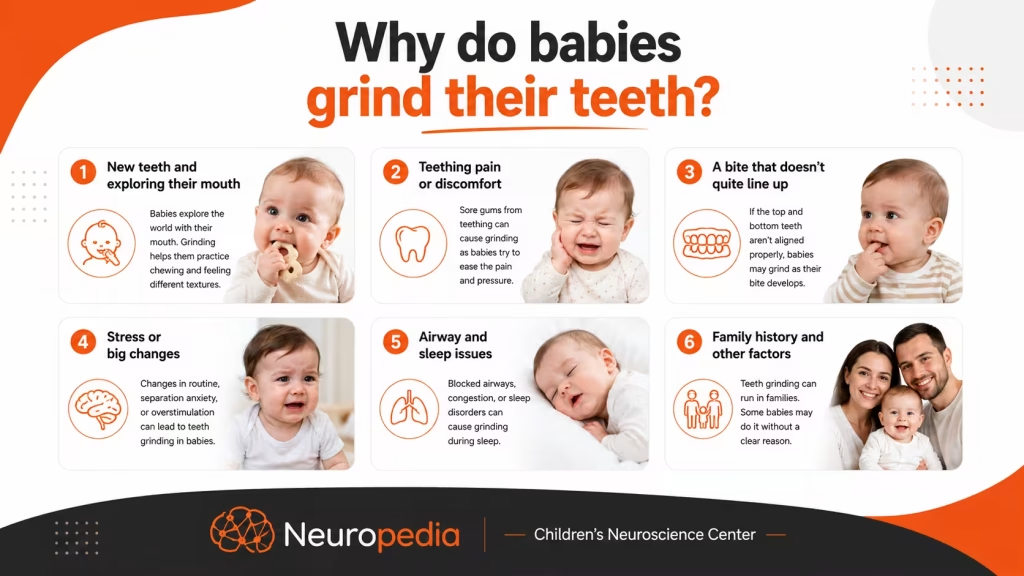
Why do babies grind their teeth?
There’s rarely one single cause. Grinding usually comes from a mix of physical development, comfort-seeking, and sometimes a little stress. Here are the most common reasons.
New teeth and exploring their mouth
Many babies start grinding soon after their first teeth come in, often between 6 and 12 months. Think of it as testing out brand-new equipment. Your baby is figuring out how their top and bottom teeth meet and what their jaw can do. Grinding those first few teeth together is simply part of exploring a new sensation, a bit like how babies explore other things by putting them in their mouths. A baby grinding new teeth is one of the most common versions of this, and it’s very likely all that’s going on.
Teething pain or discomfort
Erupting teeth can be sore, and grinding or clenching can be a way for a baby to soothe that ache. The back-and-forth motion of the jaw seems to relieve the pressure. The same can happen with an earache or a blocked, stuffy nose — discomfort in the head or face can show up as grinding.
A bite that doesn’t quite line up
As teeth come in, the top and bottom rows don’t always meet perfectly. This is called a misaligned bite, or malocclusion. When the teeth don’t fit together smoothly, a child may grind as their mouth adjusts. In young children this often sorts itself out as more teeth arrive and the jaw grows.
Toddler grinding teeth: stress or big changes
Toddler grinding teeth is often tied to stress or anxiety, especially in older toddlers and preschoolers. A new sibling, starting daycare, a move to a new home, or a shaken-up routine can all stir up small worries that show up in unexpected ways, including grinding at night. This is less common in young babies, whose grinding is usually physical rather than emotional.
Airway and sleep issues
Sometimes grinding is linked to how a child is breathing at night. Snoring, breathing through the mouth, or enlarged tonsils can cause the jaw to shift and the teeth to grind. If your child grinds and snores loudly, mouth-breathes, or seems to pause or struggle to breathe during sleep, that’s worth mentioning to your pediatrician.
Family history and other factors
Bruxism tends to run in families, though researchers aren’t sure how much of that is genes versus shared habits and environment. Research has also linked exposure to second-hand smoke, tobacco, or cannabis with a higher chance of kids sleep bruxism, which is one more good reason to keep your child’s air smoke-free.
Is it normal for a baby to grind their teeth while sleeping?
Yes. Teeth grinding while sleeping is completely normal in babies and toddlers. Teeth grinding in sleep is something many kids do, and sleep is in fact the most common time for it to happen. During light sleep, muscles, including the jaw, can twitch and tighten on their own. That’s what produces the grinding sound that carries down the hall on the baby monitor.
Because this kind of sleep bruxism happens without your child being aware of it, you can’t really stop it in the moment, and you don’t need to wake them. What matters is not the sound itself, but whether it’s causing any problems, which, for most children, it isn’t.
Can grinding hurt my baby’s teeth?
For short-lived, mild grinding, the answer is almost always no. Baby teeth are temporary, and occasional grinding rarely causes lasting harm before they fall out.
That said, grinding that is frequent and forceful over a long stretch of time can wear down tooth enamel, make teeth more sensitive to hot and cold, and in rare cases chip or crack a tooth. The bigger concern is grinding that continues once the permanent teeth start coming in, usually around age 6 and up. Because adult teeth need to last a lifetime, ongoing grinding at that stage deserves closer attention from a dentist to protect the new teeth and the jaw joints.
So the pattern to watch for isn’t a few weeks of nighttime squeaking in a teething baby; it is grinding that is heavy, painful, or sticks around into the school-age years.
When to worry: Signs it’s time to call the dentist or doctor
Most teeth grinding needs nothing more than patience. But check in with your child’s dentist or pediatrician if you notice any of these:
- Pain in the face, jaw, or ear, or complaints of headache
- Worn-down, chipped, or flattened teeth, or teeth that look different than before
- Sensitivity to hot or cold foods and drinks
- Grinding that continues after the permanent teeth start coming in
- Grinding alongside snoring, mouth-breathing, or trouble breathing during sleep
- Grinding that seems tied to ongoing stress or anxiety you can’t ease at home
None of these mean something is seriously wrong; they simply mean it’s worth having a professional take a look so your child’s teeth and comfort are protected. Trust your instincts. You know your child best, and there’s never a wrong time to ask a question about their health.
What can I do about my baby’s teeth grinding at home?
For most babies and toddlers, the honest answer is that you don’t need to do much — it will likely fade on its own. But a few gentle steps can help, especially if teething pain or stress seems to be part of the picture.
Ease teething discomfort- A clean, chilled (not frozen) teething ring, a cold washcloth to gnaw on, or a gentle gum massage with a clean finger can take the edge off sore gums. Ask your pediatrician before giving any pain medicine to a baby.
Calming bedtime routine- A predictable, soothing wind-down — a warm bath, a quiet story, dim lights, cuddles — helps relax the whole body, jaw included. This can be especially helpful for toddlers whose grinding is linked to stress.
Address worries directly- For an older toddler, extra reassurance and comfort around big changes like a new sibling or daycare can settle the anxiety that sometimes drives grinding.
Keep the air smoke-free- Avoiding second-hand smoke is good for your child in countless ways, and it may reduce grinding too.
| A Quick Safety NoteYou may see amber “teething necklaces” marketed as a remedy. Paediatric experts warn against them: anything worn around a baby’s neck is a strangulation and choking risk, and they should never be worn during sleep or naps. There’s also no solid evidence they help.One thing you generally won’t need for a baby or young toddler is a mouthguard. The custom mouthguards used for grinding are meant for older children with permanent teeth, and a dentist will let you know if and when one is appropriate. |
Why choose Neuropedia?
Neuropedia offers child-centred neurological care delivered by experienced paediatric specialists who understand the unique needs of growing children.
- Comprehensive assessment and personalised treatment plans tailored to every child’s symptoms, development, and family goals.
- A multidisciplinary team that works together to provide coordinated care across neurology, developmental paediatrics, psychology, rehabilitation, speech therapy, occupational therapy, and physiotherapy.
- Early diagnosis supported by evidence-based clinical practices to help children receive timely intervention when it matters most.
- Family-focused approach that encourages parents to be active partners in every stage of their child’s care and progress.
- Compassionate consultations with clear guidance, ensuring parents understand every diagnosis, investigation, and treatment option.
- Modern diagnostic facilities and access to advanced therapies under one roof for greater convenience.
- Ongoing monitoring and long-term support to help children achieve their developmental potential and improve their quality of life.
- Trusted by families across the UAE for ethical, transparent, and personalised paediatric neurological care.
Give your child the right start with expert neurological care
Every child deserves the opportunity to grow, learn, and thrive with the right medical support. If you have concerns about your child’s development, behaviour, movement, sleep, or neurological health, the experienced team at Neuropedia is here to help. Early evaluation can make a meaningful difference in your child’s future.
Hearing your baby grind their teeth can be unsettling, but it’s one of those startling little sounds that turns out to be part of normal development. New teeth, sore gums, a bite that’s still settling in, or a bit of toddler stress are the usual culprits, and in almost every case, the grinding fades away as your child grows.
Keep an eye out for pain, worn teeth, or grinding that lingers into the school years, and check in with your dentist or pediatrician if anything gives you pause.
Book your consultation with Neuropedia today and take the first step towards expert, compassionate care for your child.



.png)